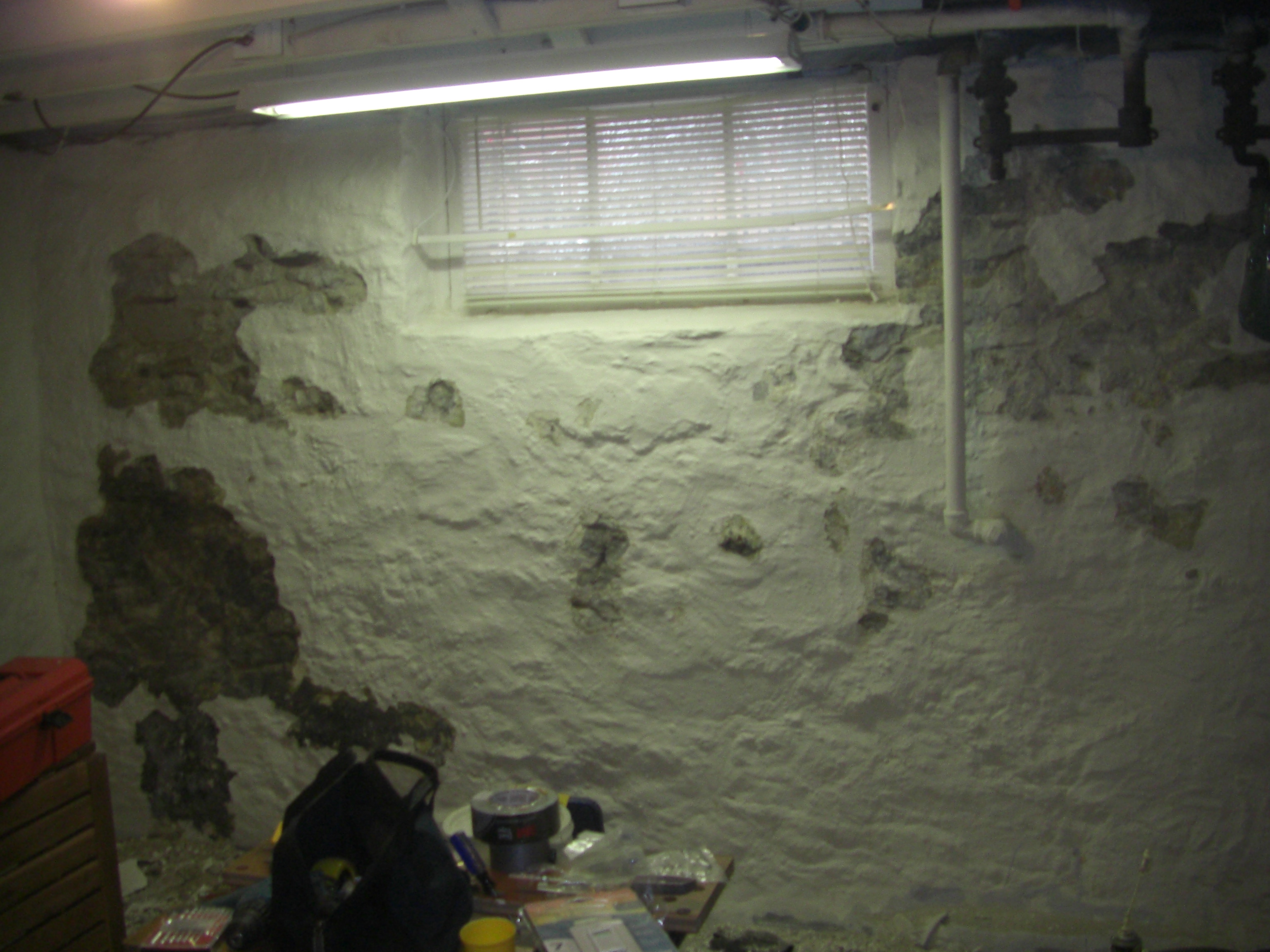
In the picture above, you can see that the foundation was wet under the cement coat or 'parding'.
The previous owner assured us that the basement did not flood. Only when the gutters were blocked did any water appear in the basement.
When I arrived at the house, for the final walkthrough, the owner and the real estate agent where in the basement with mops and buckets with four of the five rooms flooded.
The first thing we did was scrub all the floors and walls with a bleach mix,
as well as running multiple humidifiers.
When the basement was clean and dry we applied a floor sealant, then a two part
mix paint on the floors and 2 inches up each wall. This stopped any water
from leaching up through the basement floor.
The next thing was an inspection of the walls and foundation of the home.
Tapping on the foundation walls informed us that there were some areas that were
hollow behind the paint.
After an evaluation with the 'Basement Doctor' and 'The Basement Guys', we knew
foundation work was required.
The cement parding was removed from the wall where any problems were suspect.
In the picture above, you can see that the foundation was wet under the cement
coat or 'parding'.
When the house was built it was stacked limestone stones sealed with rock,
pebbles and dirt.
Over the years some small amount of water got in and washed away some dirt.
Then some more, then some more, until gaps occurred and water from an improperly
drained area filtered through.
All the loose dirt, rocks and mortar had to be removed. (This had to be
done in small sections at a time).
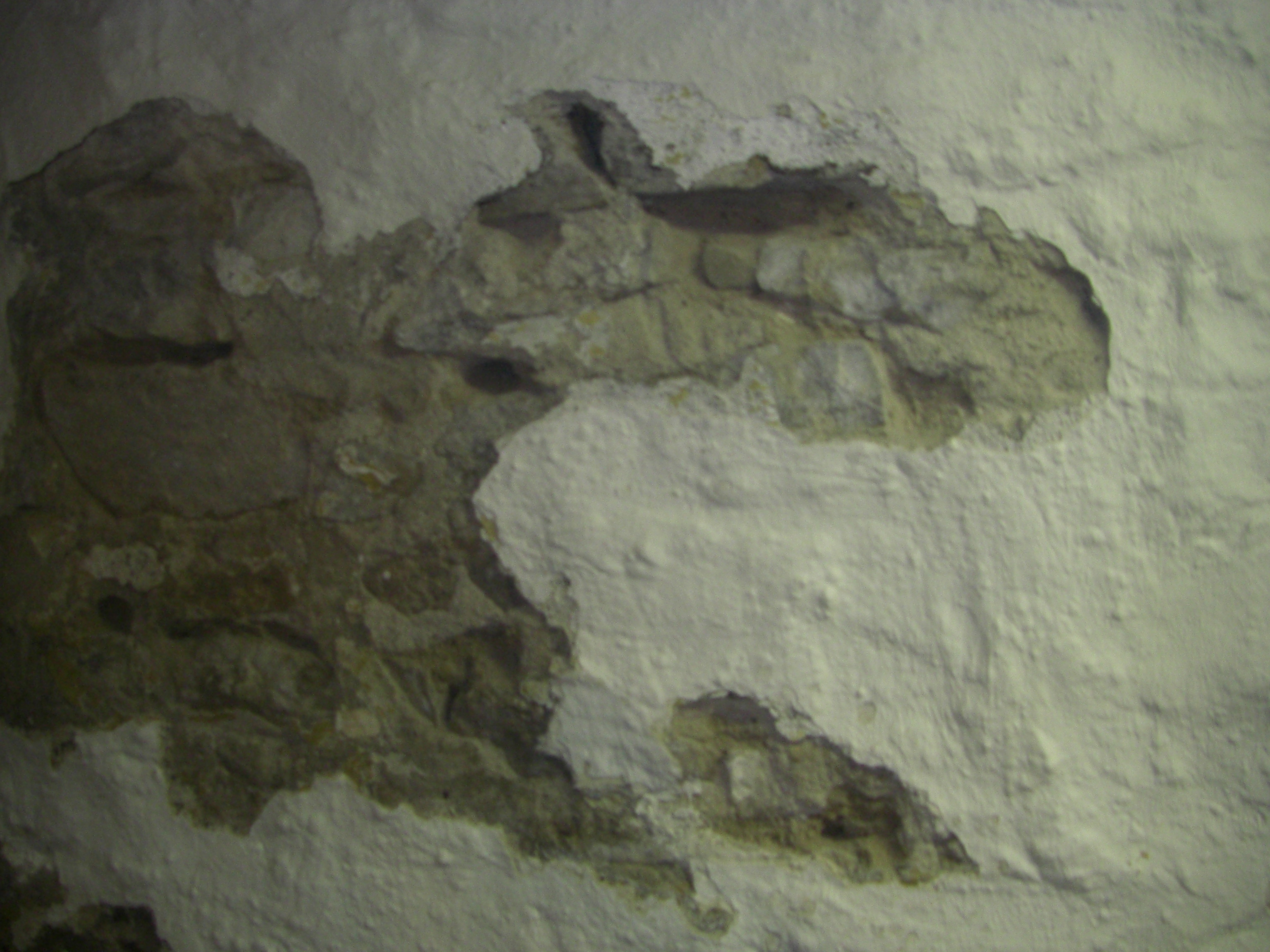
If you enlarge the above picture, you can see gaps between the stones that
you could stick fingers clear through to the outside.
After the foundation dried stones and rocks were replaced and secured with a
mortar mix
After that dried, another type of flexible waterproof mortar was applied and the
front smoothed out.
Then a special cement mortar polymer with polyester threads was used for
parding.
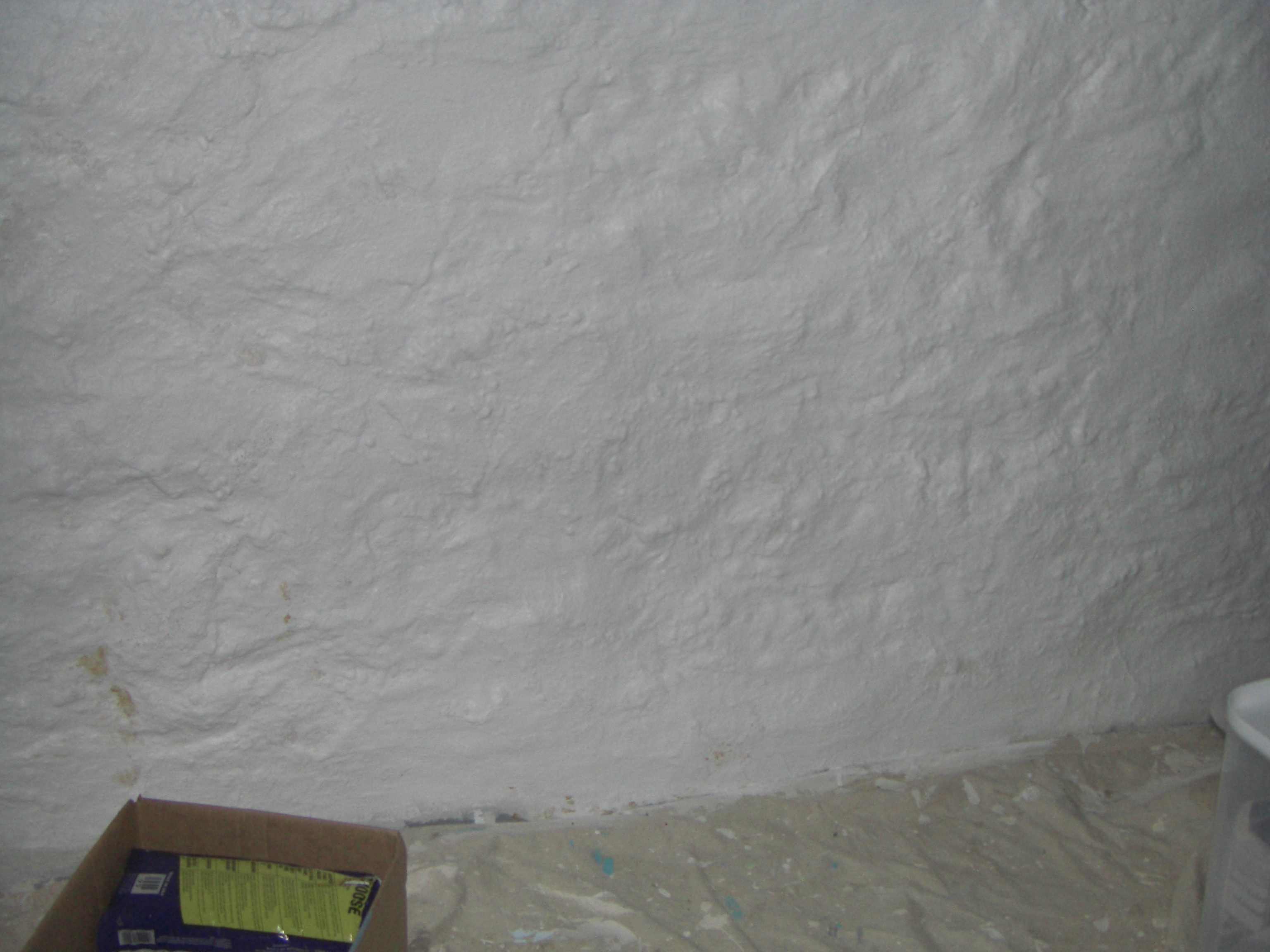
Lastly, two coats of primer and a coat of white paint finished the job.
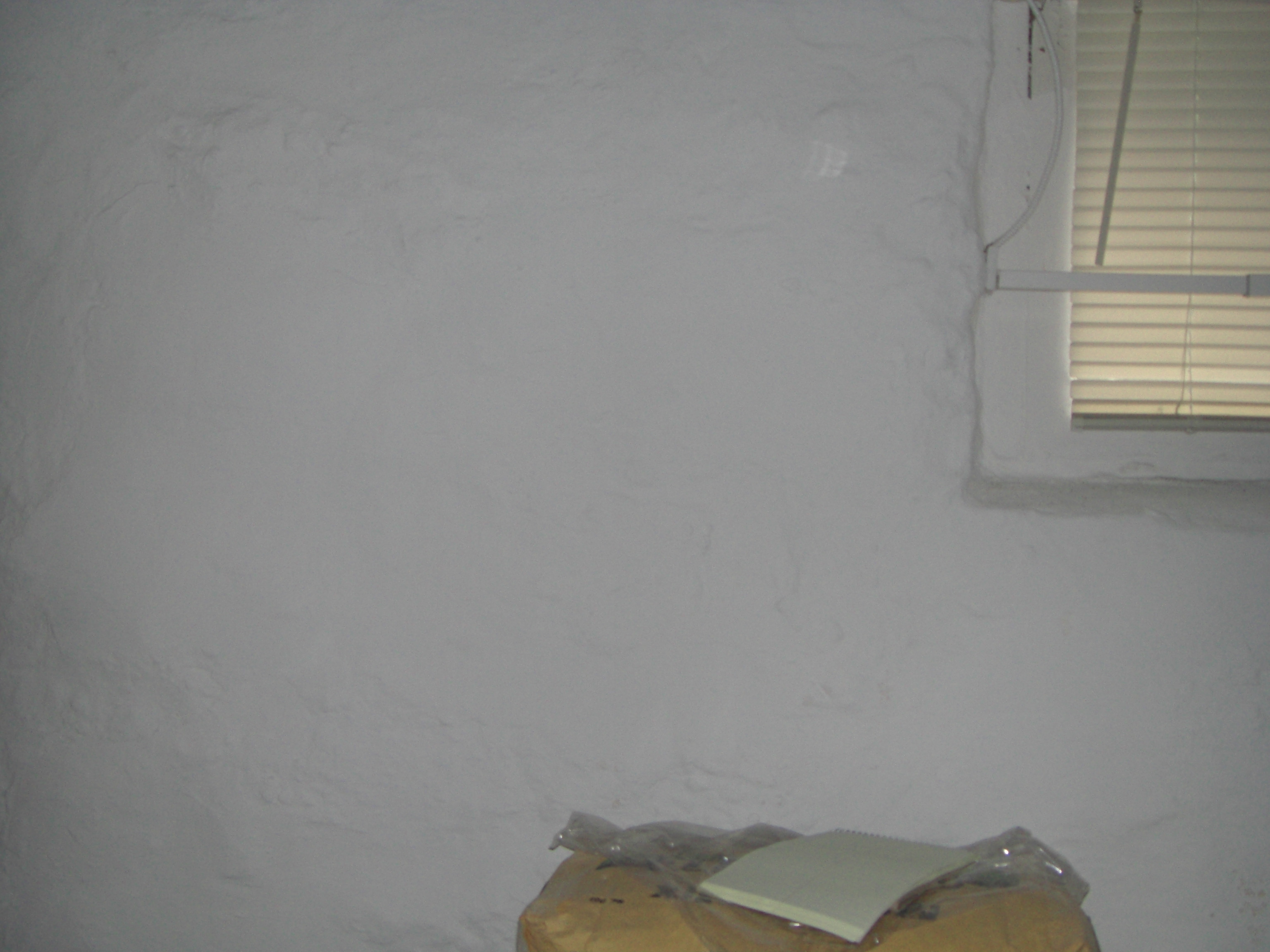
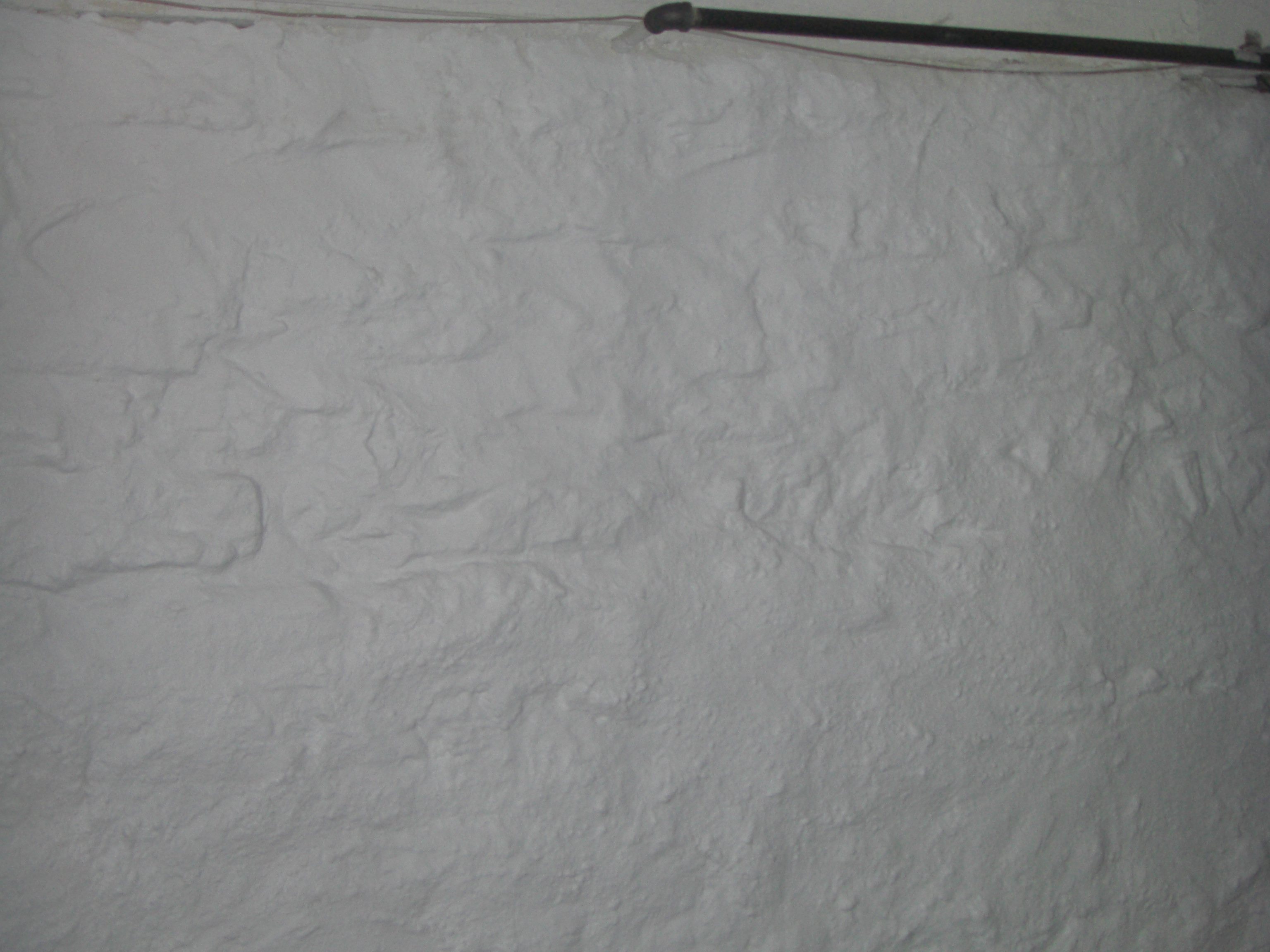
The picture on the left is the same wall as the first picture.